

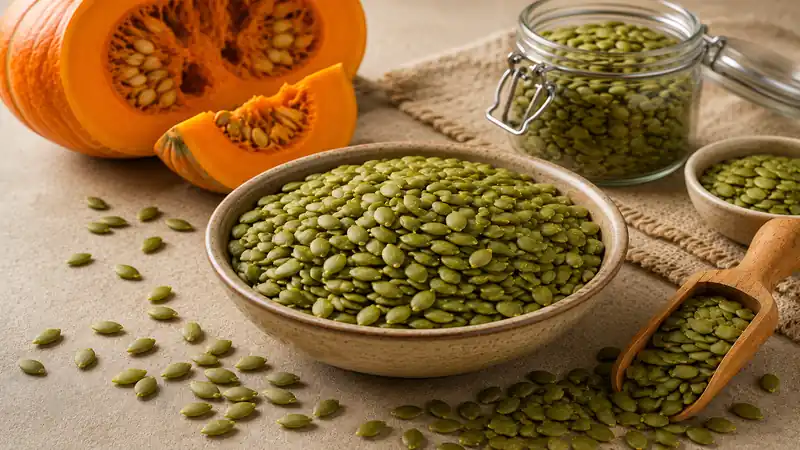
Pumpkin seeds, also known as pepitas, are among the most nutrient-dense edible seeds. Despite their small size, they provide an excellent combination of plant-based protein, healthy fats, dietary fibre, vitamins, minerals, and naturally occurring antioxidants.
Whether eaten as a healthy snack or added to salads, smoothies, yoghurt, oatmeal, or homemade trail mixes, AnnGhar Raw Pumpkin Seeds are a simple way to add wholesome nutrition to your everyday meals.
Quick Answer
Pumpkin seeds are naturally rich in plant protein, healthy unsaturated fats, magnesium, phosphorus, zinc, iron, antioxidants, and dietary fibre. Per 100 grams, they provide approximately 559 calories, 30.2 grams of protein, 49.1 grams of fat, and 6 grams of dietary fibre, making them one of the most nutrient-rich edible seeds.
Key Takeaways
- Excellent source of plant-based protein.
- Rich in healthy unsaturated fats.
- Naturally high in magnesium and phosphorus.
- Provides zinc, iron, potassium, and manganese.
- Contains naturally occurring antioxidants.
- Suitable for vegetarian and vegan diets.
- Easy to add to breakfast, snacks, and salads.
- Nutrient-dense despite their small size.
People Also Ask
Are pumpkin seeds nutritious?
Yes. Pumpkin seeds are one of the most nutrient-dense edible seeds. They naturally provide plant protein, healthy fats, dietary fibre, magnesium, zinc, phosphorus, iron, and antioxidants.
How much protein is in pumpkin seeds?
Pumpkin seeds contain approximately 30.2 grams of protein per 100 grams, making them one of the richest plant-based protein sources among commonly eaten seeds.
Are pumpkin seeds high in magnesium?
Yes. Pumpkin seeds naturally contain approximately 592 mg of magnesium per 100 grams, making them an excellent dietary source of this essential mineral.
What Are Pumpkin Seeds?
Pumpkin seeds are the edible kernels found inside pumpkins. Commonly known as pepitas, these flat green seeds have a mild, nutty flavour and are enjoyed around the world as a nutritious snack and cooking ingredient.
Pumpkin seeds can be eaten raw or roasted and are often added to salads, soups, breakfast bowls, smoothies, homemade granola, breads, and trail mixes. Their versatility and nutritional profile make them a popular choice for everyday healthy eating.
Looking for premium-quality pumpkin seeds? Explore AnnGhar Raw Pumpkin Seeds, carefully sourced and hygienically packed for freshness and quality.
Pumpkin Seeds Nutrition Facts (Per 100 g)
According to the USDA FoodData Central, pumpkin seeds provide an impressive range of macronutrients and micronutrients that contribute to a balanced diet.
| Nutrient | Amount (Per 100 g) |
|---|---|
| Energy | 559 kcal |
| Protein | 30.2 g |
| Total Fat | 49.1 g |
| Carbohydrates | 10.7 g |
| Dietary Fibre | 6.0 g |
| Magnesium | 592 mg |
| Phosphorus | 1,233 mg |
| Potassium | 809 mg |
| Iron | 8.8 mg |
| Zinc | 7.8 mg |
| Manganese | 4.5 mg |
| Copper | 1.3 mg |
Nutritional values are approximate and may vary depending on the variety of pumpkin, growing conditions, and processing methods.
Calories in Pumpkin Seeds
Pumpkin seeds provide approximately 559 calories per 100 grams. Their calorie content comes primarily from healthy unsaturated fats and plant-based protein, making them a nutrient-dense food.
A typical serving of 1 tablespoon (around 10 grams) provides approximately 56 calories, making pumpkin seeds an easy addition to balanced meals and snacks.
| Serving Size | Approximate Calories |
|---|---|
| 1 Teaspoon (5 g) | 28 kcal |
| 1 Tablespoon (10 g) | 56 kcal |
| 2 Tablespoons (20 g) | 112 kcal |
| 100 g | 559 kcal |
Protein in Pumpkin Seeds
Pumpkin seeds are one of the richest plant-based protein sources among edible seeds, providing approximately 30.2 grams of protein per 100 grams. Protein contributes to the maintenance and growth of muscle mass and supports normal bones when consumed as part of a balanced diet.
Their naturally high protein content makes pumpkin seeds a popular ingredient for vegetarian and vegan eating patterns.
For greater nutritional variety, pair pumpkin seeds with Organic Flax Seeds or Premium Chia Seeds.
Healthy Fats in Pumpkin Seeds
Pumpkin seeds naturally contain healthy unsaturated fats, including monounsaturated and polyunsaturated fatty acids. These fats contribute to the seeds’ rich flavour and are an important part of a balanced eating pattern.
Their healthy fat content also makes pumpkin seeds a satisfying addition to salads, grain bowls, homemade snacks, and breakfast recipes.
Dietary Fibre in Pumpkin Seeds
Pumpkin seeds naturally contain dietary fibre, an important nutrient that contributes to a balanced diet. Including fibre-rich foods such as seeds, fruits, vegetables, legumes, and whole grains helps create greater dietary variety.
Benefits of Fibre-Rich Foods
- Helps make meals more satisfying.
- Supports normal digestive function.
- Contributes to a balanced eating pattern.
- Easy to include in everyday meals.
Adding pumpkin seeds to breakfast bowls, yoghurt, salads, and homemade snacks is a simple way to enjoy more fibre-rich foods throughout the day.
Carbohydrates in Pumpkin Seeds
Pumpkin seeds contain approximately 10.7 grams of carbohydrates per 100 grams. Compared to many snack foods, they are naturally lower in carbohydrates while providing a good balance of protein, healthy fats, and dietary fibre.
The carbohydrates in pumpkin seeds are naturally present and come alongside valuable nutrients such as magnesium, zinc, iron, phosphorus, and antioxidants.
| Nutrient | Per 100 g |
|---|---|
| Total Carbohydrates | 10.7 g |
| Dietary Fibre | 6.0 g |
| Naturally Occurring Sugars | 1.4 g |
Vitamins Found in Pumpkin Seeds
Pumpkin seeds naturally contain several vitamins that contribute to their impressive nutritional profile. While they are best known for their mineral content, they also provide vitamin E and several B vitamins.
| Vitamin | Approximate Amount (Per 100 g) |
|---|---|
| Vitamin E | 2.2 mg |
| Vitamin B1 (Thiamine) | 0.27 mg |
| Vitamin B2 (Riboflavin) | 0.15 mg |
| Vitamin B3 (Niacin) | 4.99 mg |
| Vitamin B6 | 0.14 mg |
| Folate | 58 µg |
Eating a variety of vitamin-rich foods—including seeds, fruits, vegetables, legumes, dairy products, and whole grains—helps support a balanced diet.
Minerals in Pumpkin Seeds
Pumpkin seeds are exceptionally rich in essential minerals. In particular, they are one of the best natural sources of magnesium and phosphorus, while also providing zinc, iron, potassium, manganese, and copper.
| Mineral | Approximate Amount (Per 100 g) |
|---|---|
| Magnesium | 592 mg |
| Phosphorus | 1,233 mg |
| Potassium | 809 mg |
| Zinc | 7.8 mg |
| Iron | 8.8 mg |
| Manganese | 4.5 mg |
| Copper | 1.3 mg |
Including mineral-rich foods such as pumpkin seeds, nuts, legumes, dairy products, fruits, vegetables, and whole grains helps create a varied and nutrient-rich eating pattern.
Naturally Occurring Antioxidants
Pumpkin seeds naturally contain antioxidants, including vitamin E and carotenoids, along with other beneficial plant compounds. These naturally occurring substances contribute to the nutritional value of pumpkin seeds.
A varied diet rich in colourful fruits, vegetables, nuts, seeds, herbs, and whole grains provides a diverse range of naturally occurring antioxidants.
Pumpkin Seeds vs Sunflower Seeds: Nutrition Comparison
Pumpkin seeds and sunflower seeds are both nutrient-dense choices that complement a balanced diet. Each offers its own nutritional strengths.
| Nutrient | Pumpkin Seeds | Sunflower Seeds |
|---|---|---|
| Calories | 559 kcal | 584 kcal |
| Protein | 30.2 g | 20.8 g |
| Total Fat | 49.1 g | 51.5 g |
| Dietary Fibre | 6.0 g | 8.6 g |
| Magnesium | 592 mg | 325 mg |
| Vitamin E | Good Source | Excellent Source |
| Zinc | Higher | Lower |
Both seeds are excellent additions to a balanced diet. Including a variety of seeds provides a broader range of nutrients and flavours.
Raw vs Roasted Pumpkin Seeds
Pumpkin seeds can be enjoyed either raw or roasted. Both forms provide valuable nutrients, although roasting may slightly alter flavour and texture.
| Raw Pumpkin Seeds | Roasted Pumpkin Seeds |
|---|---|
| Natural flavour | More intense nutty flavour |
| Soft texture | Crispier texture |
| Ideal for smoothies and salads | Popular as a snack |
| Easy to mix into recipes | Suitable for trail mixes and toppings |
For the best nutritional value, choose lightly roasted or unsalted pumpkin seeds whenever possible.
Recommended Daily Intake
Most healthy adults can comfortably enjoy 1–2 tablespoons (approximately 15–30 grams) of pumpkin seeds per day as part of a balanced diet.
Daily Tips
- Enjoy pumpkin seeds as a healthy snack.
- Add them to salads, smoothies, yoghurt, or oatmeal.
- Store them in an airtight container in a cool, dry place.
- Choose unsalted varieties for everyday use.
- Combine them with fruits, vegetables, whole grains, and legumes for a varied diet.
Looking for premium-quality pumpkin seeds? Explore AnnGhar Raw Pumpkin Seeds, carefully sourced and hygienically packed for freshness and quality.
Who Should Include Pumpkin Seeds in Their Diet?
Pumpkin seeds are a versatile food that can be enjoyed by a wide range of people as part of a balanced diet. Their combination of plant-based protein, healthy fats, dietary fibre, vitamins, minerals, and antioxidants makes them an easy addition to everyday meals.
Pumpkin seeds may be a suitable choice for:
- People looking to increase their intake of plant-based protein.
- Vegetarians and vegans seeking nutrient-dense foods.
- Individuals who enjoy wholesome snacks.
- Those preparing smoothies, yoghurt bowls, salads, or homemade trail mixes.
- Anyone wanting greater nutritional variety in their daily diet.
As with any food, pumpkin seeds are best enjoyed as part of a varied and balanced eating pattern. Individual nutritional needs may differ, so consult a qualified healthcare professional if you require personalised dietary advice.
Frequently Asked Questions (FAQs)
1. Are pumpkin seeds a good source of protein?
Yes. Pumpkin seeds provide approximately 30.2 grams of plant-based protein per 100 grams, making them one of the richest protein sources among edible seeds.
2. How many calories are in pumpkin seeds?
Pumpkin seeds provide approximately 559 calories per 100 grams. A typical serving of one tablespoon (around 10 grams) contains about 56 calories.
3. Are pumpkin seeds high in magnesium?
Yes. Pumpkin seeds naturally contain approximately 592 mg of magnesium per 100 grams, making them an excellent dietary source of this essential mineral.
4. Can pumpkin seeds be eaten every day?
Most healthy adults can enjoy approximately 15–30 grams (1–2 tablespoons) of pumpkin seeds daily as part of a balanced diet.
5. Are pumpkin seeds suitable for vegetarians and vegans?
Absolutely. Pumpkin seeds are naturally plant-based and fit well into vegetarian and vegan eating patterns.
6. Which is better: raw or roasted pumpkin seeds?
Both are nutritious choices. Raw pumpkin seeds have a naturally mild flavour, while lightly roasted pumpkin seeds offer a richer, nuttier taste and crisp texture.
7. Are pumpkin seeds naturally gluten-free?
Yes. Pumpkin seeds are naturally gluten-free. If you have coeliac disease or gluten sensitivity, always check product labels for allergen and cross-contamination information.
8. Can pumpkin seeds be mixed with other seeds?
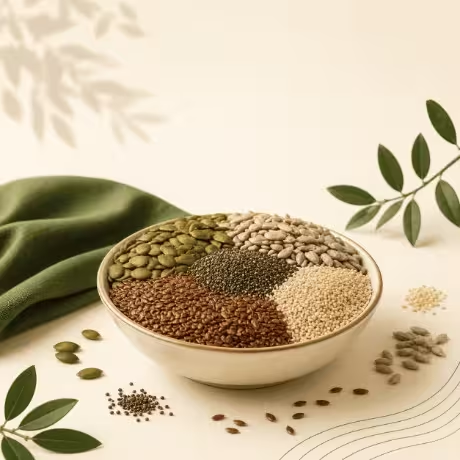
Yes. Pumpkin seeds pair well with Premium Chia Seeds, Organic Flax Seeds, Sunflower Seeds, and AnnGhar Mixed Seeds for a nutritious seed blend.
9. How should pumpkin seeds be stored?
Store pumpkin seeds in an airtight container in a cool, dry place away from direct sunlight. Refrigeration after opening can help maintain freshness, particularly in warmer climates.
10. Where can I buy premium-quality pumpkin seeds?
You can shop AnnGhar Raw Pumpkin Seeds, carefully sourced and hygienically packed to deliver freshness and premium quality.
Summary
Pumpkin seeds are one of the most nutrient-dense edible seeds, offering an excellent balance of plant-based protein, healthy fats, dietary fibre, vitamins, minerals, and naturally occurring antioxidants.
Their versatility makes them easy to include in breakfast bowls, salads, smoothies, homemade snacks, and baked recipes. Whether enjoyed raw or lightly roasted, pumpkin seeds are a simple way to add more wholesome nutrition to your everyday meals.
Including pumpkin seeds alongside fruits, vegetables, legumes, whole grains, nuts, and other seeds helps create a balanced and varied eating pattern.
Why Choose AnnGhar Raw Pumpkin Seeds?
At AnnGhar, we believe nutritious food begins with premium-quality ingredients. Our Raw Pumpkin Seeds are carefully sourced, hygienically packed, and sealed to preserve their freshness, natural flavour, and nutritional value.
Complete your pantry with our collection of Healthy Seeds, including Premium Chia Seeds, Organic Flax Seeds, Sunflower Seeds, Sabja Seeds, and Mixed Seeds.
You can also browse our premium collections of Dry Fruits, Nuts, Best Sellers, and New Arrivals.
References
The nutritional information and general dietary guidance in this article are based on reputable public sources, including:
- USDA FoodData Central
- Harvard T.H. Chan School of Public Health
- National Institutes of Health (NIH)
- Academy of Nutrition and Dietetics
- World Health Organization (WHO)
This article is intended for educational purposes only. It should not be considered medical advice or a substitute for professional healthcare or nutrition guidance. If you have specific medical conditions or dietary requirements, consult a qualified healthcare professional.
Fuel your day the healthy way
Discover premium, hand-picked dry fruits, nuts and seeds.

Related Articles
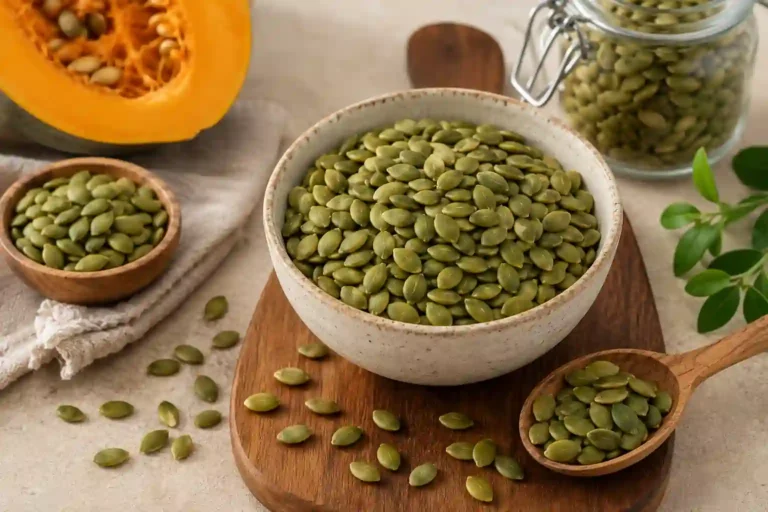
How to Eat Pumpkin Seeds: 10 Easy Ways to Add Them to Your Daily Diet
Wondering how to eat pumpkin seeds without making your meals complicated? Pumpkin seeds are one of the easiest…
How to Store Dry Fruits Properly to Keep Them Fresh Longer
Dry fruits are a convenient way to add flavour, texture and nutrition to everyday meals and snacks. But…
Create Your Own Dry Fruit Mix with AnnGhar Mix Builder
Why settle for a ready-made mix when you can create one based on your own taste, preferences, and…